‘Evacuation’ a Loaded Crisis Word
Posted on June 15, 2012
Filed Under Business, Communication, Government, Technology | Leave a Comment
It’s interesting how much added, sometimes mistaken, power words seem to gain in a crisis, when people are fearing the worst of a situation or are anxious about those in charge of dealing with it. The tendency of concerned, frightened people to escalate meaning helps explain why staying cool during an emergency and being very careful with words at such times is so important.
From Japan, in the aftermath of last year’s Fukushima nuclear disaster, comes an acknowledgement by Masataka Shimizu, the former President of Tokyo Electric Power, of his actions during the crisis: “I remember mentioning an ‘evacuation’ but I’m not sure whether I used the term ‘partial.'” Oh dear.
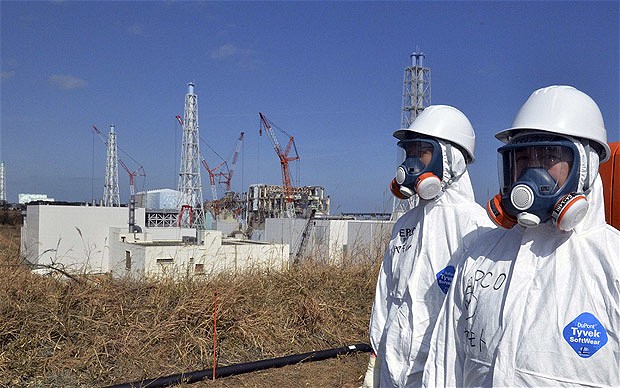 It would be a normal response to evacuate nonessential workers from an accident-stricken plant. Some of them would be needed later to relieve crews on duty. Plus, a partial evacuation is a means of reducing the risk to unneeded employees. Members of the public can also be evacuated, depending on calculations of expected releases of radiation and likely wind directions. (At Fukushima, the evacuation was eventually extended to 20 kilometers from the plant and is still in effect. Controversy over relaxing the evacuation limits and the level of compensation for residents who will be returning to their homes is delaying relaxation of the evacuation zone.)
Masataka Shimizu was very likely thinking in terms of an evacuation of nonessential personnel, but it came out in terms that were alarming to government officials.
Naoto Kan, Japan’s prime minister at the time, was angered by what he initially thought Shimizu was envisioning at the Fukushima site. He got the impression that all personnel were leaving the site. That was clarified later, but the semantic harm had been done. Trust was battered at Fukushima No. 1 along with three of its six reactors. They experienced core meltdowns in the wake of the earthquake and tsunami that triggered the disaster. All 50 of Japan’s nuclear reactors have now been shut down. Two of them are expected to restart this weekend.
In a nuclear plant emergency, the term “evacuation” is typically used with respect to members of the public, who are advised to evacuate a given distance from the plant. The confusion over the nature of the intended Fukushima “evacuation” (where the public was also evacuated) illustrates the need for very clear nuclear emergency procedures practiced and honed during regular drills. Such drills are required at U.S. nuclear plants. And they’re not just technical exercises. Media centers are activated and spokespeople representing the utility and affected governments alike are critiqued on the accuracy and clarity of the information they provide. – Doug Bedell
Comments
Leave a Comment
If you would like to make a comment, please fill out the form below.


Recently
- Presentations With Forethought
- Technical Writing’s Lineage – Surely It’s Deeper than Digital
- At the Holidays, Twitting Amazon
- Successful Cookie Baking – From Mom, an Acknowledged Expert
- Slides for a Tech Writer’s Craft
- Digital or Not, Be Clear
- Being Watchful About Digital Designs…
- When Proposals Don’t Click, Keep Making Them Anyway
- Like a Good Gardener, Help an Enterprise Keep Itself Current
- We’re Leaders All, And Need to Think That Way
Categories
Archives
- January 2017
- December 2016
- November 2016
- October 2016
- September 2016
- August 2016
- July 2016
- June 2016
- May 2016
- April 2016
- March 2016
- February 2016
- January 2016
- December 2015
- November 2015
- October 2015
- September 2015
- August 2015
- July 2015
- June 2015
- May 2015
- April 2015
- March 2015
- February 2015
- January 2015
- December 2014
- November 2014
- October 2014
- March 2014
- February 2014
- January 2014
- December 2013
- November 2013
- October 2013
- September 2013
- August 2013
- July 2013
- June 2013
- May 2013
- April 2013
- March 2013
- February 2013
- January 2013
- December 2012
- November 2012
- October 2012
- September 2012
- August 2012
- July 2012
- June 2012
- May 2012
- April 2012
- March 2012
- February 2012
- January 2012
- December 2011
- November 2011
- October 2011
- September 2011
- August 2011
- July 2011
- June 2011
- May 2011
- April 2011
- March 2011
- February 2011
- January 2011
- December 2010
- November 2010
- October 2010
- September 2010
- August 2010
- July 2010
- June 2010
- May 2010
- April 2010
- March 2010
- February 2010
- January 2010
Blogroll