Tesla and Toyota Acting Smartly Together
Posted on May 20, 2010
Filed Under Technology | Leave a Comment
Here’s an exciting story of two carmakers collaborating for mutual advantage and serving U.S. energy goals in the bargain. Toyota and Tesla Motors are parterning to reopen the former General Motors/Toyota NUMMI plant at Fremont, CA, to build electric cars there – and potentially recall thousands of laid-off workers.
Tesla Motors, advises Wikipedia, “is a Silicon Valley-based company that engages in the design, manufacture, and sale of electric vehicles (EVs) and electric vehicle power train components. It is currently the only automaker building and selling highway-capable EVs in serial production (as opposed to prototype or evaluation fleet production) in North America or Europe.” It produces at least 15, mostly custom-ordered cars a week.
Here’s the essence of the Tesla-Toyota deal, as reported on the GreenBeat blog:
“1. The joint development of a brand new,sub- $30,000 electric car, that will contain Tesla’s unique powertrain design, with everything else built by Toyota;
“2. The purchase of the NUMMI plant, where Tesla plans to manufacture both its Model S sedan due out in 2012, a new $30,000 Tesla-designed vehicle, and the more affordable jointly designed “third-generation” vehicle;
“3. A $50 million investment from Toyota into Tesla when the company goes public, probably later this year.”
 Another electric car initiative in the U.S. will enliven the marketing scene that’s been developing around the forthcoming Chevy Volt and Nissan Leaf. 4,700 people worked at the NUMMI plant and it’s possible that when Tesla’s Toyota-assisted sub-$30,000 car rolls out even more than that number will be employed.
This is all great news involving intelligent energy policy and enlightened management thinking as well. A win-win partnership very much in the public interest. – Doug Bedell
* * *
This is a significant development. I lived only about 10 miles away from that plant and it was a big employer when I was young. I recall touring the plant with my Boy Scout troop.
I understand Tesla’s existing models sell from about $50,000 to $100,000, so a sub-$30,000 vehicle is a big step forward. I’ve read reviews of their existing models and they have amazing acceleration.
This is a nice example of a Silicon Valley startup thinking outside the box and coming up with a way to ramp up production quickly. – Dennis Owen
Comments
Candidates for Summer Reading
Posted on May 16, 2010
Filed Under Technology | Leave a Comment
We’re not great fans of lists (though we sometimes get curious about what made a given list and what didn’t). But here’s one that anticipates a prime seasonal activity: Summer reading.
 Two gents who write for the V3.co.uk blog, Iain Thompson and Shaun Nichols, have compiled a list of the “Top 10 science fiction writers.” “We’re going to get hammered on this one,” they note right off. And they’re getting lots of comments, some critical of their choices and others supportive.
In the interest of providing summer reading possibilities, some of which you may have forgotten about, here’s their 10 science fiction icons. They include explanations of their choices, which gives the list more heft then on than one simply plucked from the blue:
1. Arthur C. Clarke – “The most popular question asked by SF authors is ‘What makes us human?’, a query that Clarke regularly made with his most popular works,” including, of course, 2001: A Space Odyssey.
2. Jules Verne – “Verne’s writings predicted a host of inventions, including everything from air conditioning to helicopters….Some of his writing was also prescient. One story involved three astronauts launched from southern Florida in a capsule that splashes back to Earth.”
3. Douglas Adams – “Adams thrived because he mixed a great sense of humour into his work. Starting as a television writer and making a brief appearance on Monty Python’s Flying Circus, Adams was later employed to write a radio series for the BBC. What followed was one of the most beloved works of SF in the past half centure…The Hitchhiker’s Guide to the Galaxy.”
4. Isaac Asimov – “Asimov wrote some great SF to be sure. The Robot stories were light years ahead of their time in terms of understanding the thinking behind artificial intelligence (AI) programming and the consequences of getting it wrong.”
5. Harlan Ellison – “His dark, edgy works helped pave the way for contemporary SF styles such as cyberpunk, and helped the genre mature and adapt to changing attitudes.”
6. Robert Heinlein – “In addition to excellent stories, Heinlein contributed the idea that you can make a poignant social and political commentary while still telling a great story.”
7. Neal Stephenson – “While Stephenson’s earlier work, particularly Zodiac, is more scientific than technical he hit his SF form with Snow Crash and followed through in 1995 with Diamond Age, a brilliant examination of nanotechnology and the way society, commerce and computing systems will be changed by new technology.”
8. William Gibson – “Barely a year after IBM introduced its first PC, Gibson described the future of online communications and the story potential of artificial intelligence in such an environment. It was a mental leap that left the rest of the SF world scrambling to catch up. Gibson’s style and subject unleashed a whole new form of SF onto the market in the form of ‘cyberpunk’.”
9. H. G. Wells – “Works such as The Time Machine, The Invisible Man and The War of the Worlds, which dealt with the fields of physics, chemistry and biology respectively, are still watched and reworked today, with varying degrees of success.”
10. Iain M. Banks – “Most of his SF output takes place in the Culture universe, a polyglot society of roughly humanoid ancestry tens of thousands of years ahead of today. It’s a society where computer and human minds meld, where technology comes close to magic and yet the same old human (and alien) concerns come to the fore.”
And two Honorable Mentions: Gene Roddenberry (author of the original Star Trek series) and Charles Stross (Glasshouse).
Be sure not to forget the sun tan lotion. – Doug Bedell
Comments
Information Isn’t Knowledge, and We’re Drowning In It
Posted on May 9, 2010
Filed Under Business, Technology | Leave a Comment
Phil Murray argues in a meaty article in KM World that we’re paying too much attention to information, trying too hard to cope with its rising tides, and not enough to meaning. He’s got a point, a truly profound one, actually.
 We’re preoccupied, for instance, with all the coverage of possible damage from the BP oil spill, and not giving enough attention, at least not yet, to whether it’s smart to drill in 5,000 feet of water in the first place. We’ve had the information that it can be done, but is it wise to do it? What’s the current meaning of our energy situation, anyway? In what context are we looking at that?
“Meaning? Yes, ‘the thing one intends to convey especially by language,’ according to the Merriam Webster dictionary,” Murray writes. “…The connections among things. Causes and effects. In the context of work: the relevance or importance of those connections. The subject of logic, argument and epistemology. A pervasive, essential aspect of rational human activities that is accepted as critical to creation of value and economic progress, and yet an idea routinely dismissed as unusable, elusive and unmanageable at the same time…” So keep piling up the information, without asking whether it’s really worth the risk of an explosive gas bubble surging up from the ocean floor.
Knowledge is information refined by a disciplined approach to reality exercised on a different plane than those of incoming flows or profit projections.
These sorts of things ought to be concerns for knowledge workers everywhere, Murray (whose article went to press a couple of months before the BP spill) rightly insists.
“The stunning reality is that we, as knowledge workers, often spend more than half our time doing work that has no formal description, no standards for best practices and no appropriate metrics. What’s more, that work is not formally or explicity connected to specific outcomes, whether they are services or products.”
So let’s try hard to get focused on relationships and meaning, along with information. That’s where the real value in knowledge work (I almost slipped and said “intellectual work” ) lies.
Murray’s lengthy piece is one to ponder and pass along, seriously. – Doug Bedell
Illustration courtesy of freedigitalphotos.net.
Comments
Technology Tracking Us Down
Posted on April 29, 2010
Filed Under Technology | Leave a Comment
It’s getting so that technology can follow you anywhere, sometimes with adverse consequences for the follower.
The Lower Merion School District outside Philadelphia, one of Pennsylvania’s, if not the nation’s, finest school districts, is in expensive legal trouble for using LANrev asset-tracking software surreptitiously in hopes of turning up missing school-issued laptop computers. When activated by district personnel, the software took 56,000 or more photos of students in their homes and bedrooms from the webcams on their laptops, unknown to the kids themselves or their parents. When the district allegedly stonewalled on what its IT people were doing, a couple of parents filed a lawsuit that’s likely to cost the Lower Merion schools a bundle.
Ireland’s Aer Lingus airline isn’t monitoring passengers any more than they’re being scrutinized by security people these days, but it’s turning their seats into onboard, online shopping malls. A news release from GuestLogix, Inc., says that, with a multi-year Aer Lingus deal, it’s now providing its onboard credit-card-propelled shopping service to “35 percent of global airline passenger traffic.”
There you are, high above the clouds, and the urge strikes to buy a new pair of cufflinks. No problem; a sales device is at hand. (We thought on a recent flight we were asked to keep cell phones and other such electronic equipment turned off, but maybe that was just on takeoff and landing.)
We’re wondering if we’ll come to a point at which society will say, in some manner, “Just because we can do it, doesn’t mean we will do it. That sort of thinking might make some technologist friends jittery, but some of the devices they’re coming up with are making us a little queasy. – Doug Bedell
Comments
Attention Should Be Paid, Because It’s Appreciated
Posted on April 25, 2010
Filed Under Uncategorized | Leave a Comment
Our attention was drawn to two stories in the Sunday papers on means of paying attention to others, once you recognize that paying attention is important. For teenagers with electronic devices and lots of friends, that’s a no brainer. For busy doctors, however, paying attention to patients in an effective manner while spending as little time with them as necessary make take some – attention.
Ivey Dejesus in The Patriot-News, covering Central Pennsylvania, writes that, according to the Kaiser Family Foundation, kids from eight to 18 plugged into electronic media spend 53 hours a week “texting, e-mailing, tweeting, posting on Facebook, catching a favorite show on hulu.com or playing ‘Dungeon Hunter.'” That amounts to an average of seven hours and 38 minutes a day. With multitasking on their media, it comes to more in terms of content created or controlled.
Dejesus adds that cell phone texting “has become the preferred mode of communication among teens,” according to the Pew Center.
Parents don’t get as upset over their kids’ fixation on electronic media as you might think. That’s because the odds are increased that they at least know where the kids are, or can call them on their cell phones to find out. Some parents buy GPS-type family locator phone plans to help them keep track of their kids. And some even call them when they’re in school, at a math class for instance, definitely not cool.
When we were growing up, model railroads, chemistry sets, bikes or dolls were the thing. We tended to stay close to home because meeting and dating the opposite sex was sometimes more than a little trying. Then, of course, along came television, and we spent hours glued to the tube.
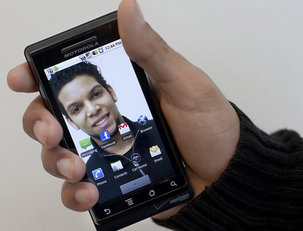 Having kids in constant touch through texting or other forms of computer communication can presumably be a good thing because it makes forming relationships easier and more conversational, and that’s healthy. Some kids, of course, use unfortunate texting judgment in the photos they share, but educational campaigns are catching up with those misguided practices.
So let the kids be connected; maybe it will translate into a better connected country and society when they grow up.
Doctors should already know the value of paying heed to their patients and how to accomplish that in their brief encounters with them. Many do, but how many of them realize it’s best to sit with a patient rather than stand before them? Supposedly mannerisms that communicate well are taught in medical schools, but doctors get too busy to remember what they may feel are pretty subtle distinctions.
Not really so, reports Alan Bavley for the McClatchy newspapers in The Lebanon (Pa.) Daily News. Researchers at the University of Kansas Hospital in Kansas City, Kan., have found that doctors who sit with their patients get “significantly higher marks for satisfaction,” and actually spend less time with their patients than those who stand while they discuss health issues with them.
Unfortunately, hospital rooms aren’t designed for physician sitting – chairs are often stuffed with belongings or visitors. A doctor may have to sit on the foot of the bed, but he or she probably should. It’s a better communication locale than standing.
When patients were asked to estimate the time a given doctor spent with them, Bavley reports, “those who got a standing visit said three minutes, 44 seconds, while those who got a sitting visit said five minutes, 14 seconds – a significantly longer time.” Actually, the doctor “spent one minute and 28 seconds with patients when he stood and one minute, four seconds when he sat,” not a statisically significant difference but a fascinating one. (The researcher was outside the rooms with a stopwatch.)
When people feel that attention is being paid to them, they tend to give more credit for the gesture than the time actually spent. “The doctor took the time to sit and listen,” one said. “He sat down long enough to get all of my questions answered.”
But note that he actually spent less time on average when he was sitting.
To treat others enthusiastically, as kids do with their electronic devices, or caringly as empathetic doctors do when they sit with a patient, is to pay them attention in a manner that’s appreciated in given circumstances. Pay attention to that, folks. – Doug Bedell
Comments
An Underwater Robot Powered by Temperature Differences
Posted on April 20, 2010
Filed Under Technology | Leave a Comment
We wrote a while back about industrial robots that are gaining amazing dexterity in their arms and fingers. Now here’s word of robotic vehicles that can roam underwater powered entirely by the natural temperature differences at different ocean depths.
Couple mobile underwater robots with reach and grasp and you have new exploratory possibilities for sure.
NASA, the U.S. Navy and university researchers have demonstrated “the first robotic underwater vehicle to be powered entirely by the natural temperature differences found in varying depths of the ocean.”
 The new technology is functioning on an undersea robot called the Sounding Oceanographic Lagrangrian Observer Thermal RECharging (SOLO-TREC). It’s envisioned to be useful for indefinite monitoring of the oceans for climate and marine animal studies as well as exploration and, of course, surveillance. (James Bond, get back into your wet suit!)
SOLO-TREC, in fact, sounds like the fabled perpetual motion machine, but it really isn’t that. “People have long dreamed of a machine that produces more energy than it consumes and runs indefinitely,” Jack Jones, a NASA Jet Propulsion Laboratory (JPL) principal engineer in Pasadena, Calif. and SOLO-TREC co-principal investigator, said in a statement.
“While not a true perpetual motion machine, since we actually consume some environmental energy, the prototype system demonstrated by JPL and its partners can continuously monitor the ocean without a limit on its lifetime imposed by energy supply,” Jones said.
SOLO-TREC was recently tested for three months 100 miles southwest of Honolulu, Hawaii. It’s a technological wonder that promises to give us far-ranging access to the oceans. – Doug Bedell
Comments
Miniaturization at the ‘Indy 500’
Posted on April 2, 2010
Filed Under Technology | Leave a Comment
Two months and it will be “Indy 500” time again. That’s a day for celebrating not only driving skill and sportsmanship but also high technology.
And not just all that goes into the high-speed Indy cars themselves. Here, for instance, is an example of miniaturization that’s likely to get the the ear of an Indy car driver – get into the ear of an Indy driver, that is.
 IndyCar Driver Earpieces don’t just protect a driver’s ears from the piercing roar of the cars. They contain speakers that allow the driver to communicate with his pit crew. And they include “multi-axis accelerometers” for accumulating information that, in the event of a wreck, can help determine the impact forces the driver endured.
All that at the end of a cable that goes into your ear (if you’re an Indy car driver). There may be even more impressive examples of miniaturization, but these Indy earpieces are surely examples of technological ingenuity at its best.
To get you in the mood for this year’s Memorial Day “500”, here’s a video of the “closest Indy car race ever,” not from the Indianapolis speedway, as it happened but from the Chicagoland speedway in 2003. – Doug Bedell
Comments
Learning’s About to Leap Again
Posted on March 30, 2010
Filed Under Technology | Leave a Comment
This could be one of the most important weekends since Johannes Gutenberg announced the invention of moveable type 570 years ago. And, says Wikipedia, Gutenberg’s breakthrough for learning the world over is “widely regarded (as) the most important event of the modern period.” The printing press greatly abetted, if not launched, the Renaissance, Reformation and the Scientific Revolution which, of course, gave rise to modern times.
Well, Apple Computer’s iPad goes on sale Friday. Don’t scoff when we compare the shiny tablet to Gutenberg’s new printing technology. The more people learn about the iPad, the more excited they seem to become about it. At first as Steve Jobs announced the device in January, Daniel Lyons recalls in the cover story of this week’s Newsweek, “it seemed like no big deal. It’s a bigger version of the iPod Touch, right? Then I got a chance to use an iPad, and it hit me, I want one.”
 A lot of people who haven’t tried an iPad yet seem to feel the same way. One estimate is that 200,000 of them will be sold this weekend. That’s not only significant for Apple, but for literacy in our time. Why? Because ebooks, led possibly by the iPad, are likely to make electronic learning common, and perhaps more successful than paper-based instruction, in classrooms and households around the world. (Amazon bought Newsweek’s back cover to promote its own Kindle ereader, probably in hopes of keeping abreast of Apple.)
You can not only read books but watch movies, play games, listen to music, send email and sort photographs on the battery-powered iPad. And it only needs to be in your lap, not on a desktop. (We haven’t heard yet whether you’ll be able to print from the touch keyboard, but we suspect so. If not now, soon.)
Think what the iPad and other tablet approaches to reading and learning mean. They bring together all the excitement that youngsters have been experiencing growing up with computers and the Internet, all the new windows they have on the world. And it’s fun, exhilarating actually, to open and use them.
What might that do for further learning and creativity? Stick around a while, please do. This new era isn’t to be missed.
“There’s a wholesale transition building steam around the way content is distributed and then accessed by students and teachers, and there are multiple formats, multiple devices and multiple distribution channels,” Rik Kranenburg, president of the higher education, professional, and international group at McGraw-Hill Education says in the April EContent magazine.
“The combination of print and digital offerings does very impressive things,” Kranenburg adds “It opens up new opportunities to make instruction and study more effective, more efficient and more personalized.”
A lot of wood carvers and wielders of ink brushes were probably thinking much the same thing in Johannes Gutenberg’s day. Questions remain about how ebooks will be gotten into the hands of people everywhere, but the first typeset books didn’t circulate widely either.
Incidentally, Seton Hill University in Greensburg, Pa., is providing each of its full-time students with an iPad and a 13″ MacBook laptop – screens in the wind? – Doug Bedell
Comments
Bank Closings ‘In Perspective’
Posted on March 26, 2010
Filed Under Business | Leave a Comment
It’s work these days to keep things in perspective but it’s worth the effort. For instance, we’ve just had the 41st bank closing in 2010. Forty-one banks shuttered, and the year isn’t three months old. Sounds like a lot, doesn’t it? Not really, maybe.
When you head over to the Federal Deposit Insurance Corp.’s website, you find that there were “thousands” of bank failures in the 1920s and early 1930s, which, as we know, led to the formation of the FDIC itself.
Now when a bank closes, depositors are insured up to $250,000 per account so nobody looses any money, unless they foolishly kept more than a quarter million in a given account.
The four banks that were just closed will cost the FDIC insurance fund around $320.3 million and $100 billion is expected to be needed to cover failed banks over the next four years. But no matter, the FDIC currently has $66 billion in cash and securities in reserve, and the government is likely good for the rest.
 So get inured to bank closings, they’re nothing to lose sleep over anymore. Neither are continued layoffs by state governments, nor the problems young people are having finding jobs – the recovery is gaining strength, isn’t it?
© iStockphoto/ilbusca
Unsettling times indeed. They call for policies to unleash the creativity and ability available in the American people. We don’t know quite what those policies ought to be, but we were heartened to hear that part of the supplemental health care bill that Congress just passed to “fix” the first one included “education provisions that help students with loan payments.
“The education related initiatives funded by the law are fully paid for by ending the government subsidies currently given to banks and other financial institutions that make guaranteed federal student loans,” the White House said in a statement.
So maybe the banks aren’t getting entirely solicitous treatment after all. Hard to say.
Wherever we’re headed, we certainly feel there’s a role for creative, compassionate government, one that unlocks potential and doesn’t simply hoard whatever it is that anti-government politicians seem to feel needs hoarding.
Do your job Washington, and keep us informed every step of the way. We’re rooting for you. And we’re keeping those bank closings “in perspective.” – Doug Bedell
Comments
‘Augmented Reality’ On the Highways
Posted on March 19, 2010
Filed Under Technology, Uncategorized | Leave a Comment
We practically launched Insights with a post about electric cars and our hopes that Chevrolet’s Volt will indeed be launched in November. Now here’s Guy Kawasaki test-driving a Volt at the SXSW new media conference in Austin.
It runs! It handles nicely! Its approximate range will be 400 miles on an eight-gallon tank of gas and the electric motor will always power the car! This last is a reference to the Volt being a “series” hybrid. Existing hybrids are “parallel” vehicles – “the electric motor powers the car for low speeds, and the gasoline engine kicks in for greater acceleration and higher speeds,” Kawasaki advises.
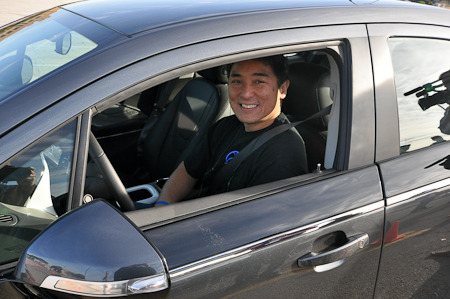 It’s interesting (though dismaying) to note that the Volt test-driving was done in the parking lot of an Austin shopping mall where most of the stores were out of business – a hapless setting not unlike Detroit itself.
With electric cars, though, we may be at the symbolic juncture of two eras in the U.S.: the decline of the old manufacturing economy and the rise of a new innovation-powered one that’s good for renewed production of industrial goods and jobs. We certainly need that kind of good fortune. And we’re wishing the Volt all success (at a reasonable price, of course).
Now, if electrically-powered transmission can be coupled with GM’s new “augmented reality windshield” we may really have something! GM says the new windshield can highlight landmarks, obstacles and road edges before a driver’s eyes, in real time. It can point out to drivers potential hazards, such as a running animal, even in foggy or dark conditions.
Boy, that would be great. Maybe “augmented reality” can even catch sight of a revived, prosperous and reliable industrial economy for us all. Right on at the new GM! – Doug Bedell
Comments


Recently
- Presentations With Forethought
- Technical Writing’s Lineage – Surely It’s Deeper than Digital
- At the Holidays, Twitting Amazon
- Successful Cookie Baking – From Mom, an Acknowledged Expert
- Slides for a Tech Writer’s Craft
- Digital or Not, Be Clear
- Being Watchful About Digital Designs…
- When Proposals Don’t Click, Keep Making Them Anyway
- Like a Good Gardener, Help an Enterprise Keep Itself Current
- We’re Leaders All, And Need to Think That Way
Categories
Archives
- January 2017
- December 2016
- November 2016
- October 2016
- September 2016
- August 2016
- July 2016
- June 2016
- May 2016
- April 2016
- March 2016
- February 2016
- January 2016
- December 2015
- November 2015
- October 2015
- September 2015
- August 2015
- July 2015
- June 2015
- May 2015
- April 2015
- March 2015
- February 2015
- January 2015
- December 2014
- November 2014
- October 2014
- March 2014
- February 2014
- January 2014
- December 2013
- November 2013
- October 2013
- September 2013
- August 2013
- July 2013
- June 2013
- May 2013
- April 2013
- March 2013
- February 2013
- January 2013
- December 2012
- November 2012
- October 2012
- September 2012
- August 2012
- July 2012
- June 2012
- May 2012
- April 2012
- March 2012
- February 2012
- January 2012
- December 2011
- November 2011
- October 2011
- September 2011
- August 2011
- July 2011
- June 2011
- May 2011
- April 2011
- March 2011
- February 2011
- January 2011
- December 2010
- November 2010
- October 2010
- September 2010
- August 2010
- July 2010
- June 2010
- May 2010
- April 2010
- March 2010
- February 2010
- January 2010
Blogroll